Bathroom lighting
Bathroom lighting: mirror, IP rating and the evening ritual
A bathroom is not a utility room. Vertical light at the mirror, IP-rated fittings in the shower zone and a warm scene at the bath define the premium experience.
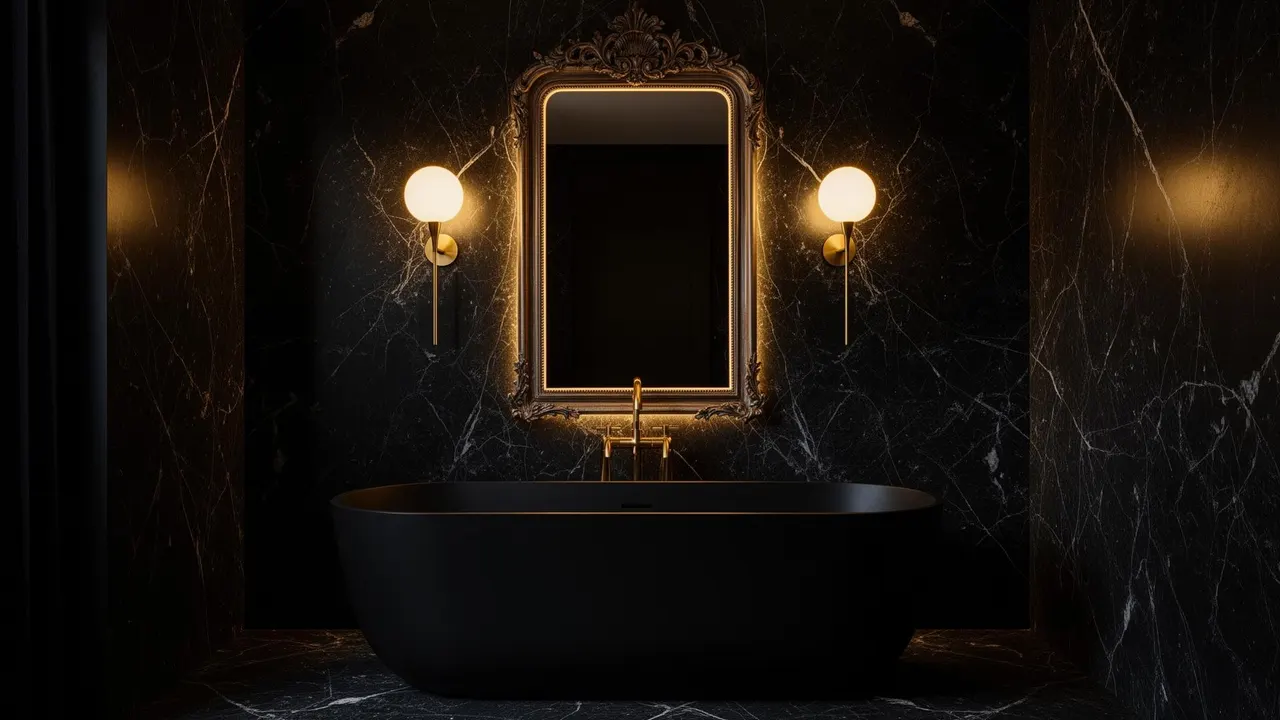
A bathroom combines two opposite needs: precise mirror light for morning make-up and shaving, and a warm dim atmosphere for the evening bath. The answer is always layering, never a single ceiling light.
At the mirror, vertical illumination of the face matters more than horizontal overhead. Overhead casts shadows under the eyes and chin — the 'horror portrait' effect. Two vertical fittings beside the mirror (at eye level ± 10 cm) plus soft overhead ambient is the standard.
Bathroom zones and protective measures must follow the applicable national electrical-installation standard for baths and showers (IEC/HD 60364-7-701 family). IP rating or distance from a bath alone does not establish suitability. The electrical designer must also check permitted equipment, supply, circuit protection, power-supply location and manufacturer instructions; this overview is not an installation design.
CCT: 2700 K for the bath and evening, 3000 K at the mirror for skin accuracy. Optimum: Tunable White switching 'make-up' (3000 K, 100 %) and 'relax' (2700 K, 20 %).
Assess skin and cosmetics under the actual source at the mirror. Ra 90 or 95 can be a design target; Ra 80 alone does not determine every shade or the difference between indoor light and daylight.
Dimming and scenes: morning 100 %, evening 20–40 %, night 5 % or floor-level orientation strip under the vanity. Warm Dim shines here.
Practical applications
Master bathroom (Penthouse)
Consider mirror lights, soft ambient lighting and dimmed night-time orientation. Use an accent above the bath only after the electrical designer checks the exact luminaire and position; IP44 alone does not establish suitability.
Hotel bathroom (Hospitality)
One switch at entry triggers a Welcome scene (50 % ambient + mirror). A DALI Night scene with floor orientation auto-runs 23:00–06:00.
Shower and wet-room
For showers and wet rooms, check the actual position, protective measures and product suitability against manufacturer instructions. IP65 alone does not establish all requirements or resistance to steam and corrosion. RGB lighting is an aesthetic feature, not an established therapy.
Guest WC
A single ceiling fitting is not enough — add a mirror sconce and a dim cove strip. PIR sensor for auto on/off.
Advantages
- Right mirror light improves make-up and shaving accuracy
- Protection requires a suitable product and correct design and installation; IP alone does not guarantee safety in steam
- Warm Dim turns the bathroom into an evening ritual
- Limit night lighting to the intensity and duration needed; better sleep is not guaranteed
Limitations
- IP-rated fittings are pricier with smaller design choice
- Vertical mirror sconces need cabling at the mirror plane
- Tunable White raises cost but dramatically improves the experience
Recommendations
- Vertical light beside the mirror, not above
- Select ingress and electrical protection for the zone, external conditions, national standard and manufacturer instructions
- CRI ≥ 95 at the mirror, ideally Tunable White 2700–3500 K
- Dimming with at least three scenes (Make-up, Relax, Night)
- Cove strip under the vanity for night orientation
- Select ingress and electrical protection for the zone, external conditions, national standard and manufacturer instructions
Common mistakes
- Single overhead fitting with no mirror sconce
- Cool light (4000 K+) — hospital feel
- Choosing mirror lighting by Ra alone without assessing skin and cosmetics
- No dimming — full power even at night
- Wrong IP rating in the shower zone — safety and lifespan risk
In summary
Assess facial lighting and colour rendering at the mirror, and set evening and night-time intensity as needed. The electrical designer must verify the safety and suitability of each bathroom luminaire for its actual position and applicable requirements.
Want a quick estimate of the luminaire count? Open the lighting calculator.
Premium Light Studio
Planning a project? Get in touch.
Apply the article to your project. Use the short form to describe the space, project stage and the help you need.
Prepare the project location, approximate dimensions, preferred timing and indicative budget. You can add a link to a plan or datasheet; describe any open questions in the notes.
Prepare a project enquiryThe article topic carries into an editable note that you can expand or replace.