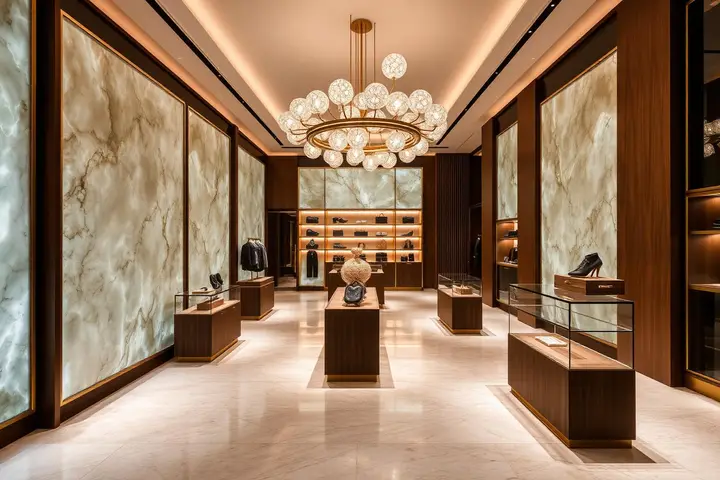
Common mistakes
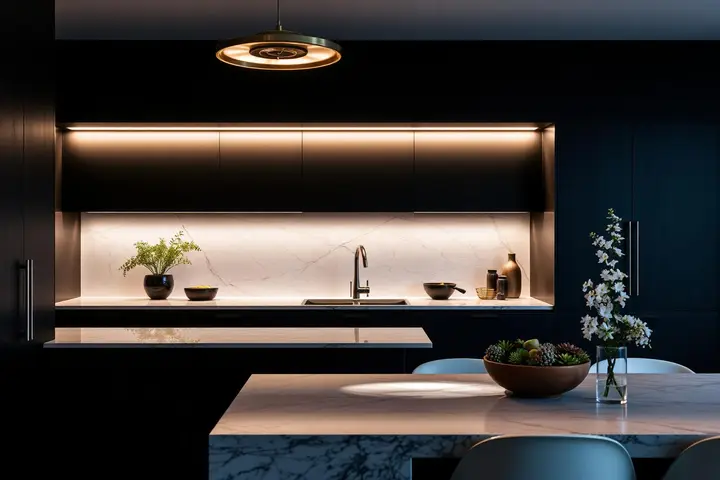
5 mistakes we see in every second kitchen
The most common kitchen-lighting mistakes — from wrong CCT to shadows on the worktop.
Read article
Premium Light Studio
A practical guide to architectural lighting — from lumens, lux and colour rendering to choosing luminaires and designing room-by-room lighting.
01
The quantities and properties of light that determine light levels, visual comfort and how colours and materials are perceived. For anyone who wants to understand the brief before selecting luminaires.
Koľko lumenov potrebujete do obývačky, kuchyne či spálne? Pochopte rozdiel medzi lumenmi, luxmi a wattmi a vypočítajte orientačnú potrebu svetla podľa m².
Pillar articleCRI (Ra) describes how faithfully a light source renders colours compared to a reference. For demanding interiors, consider CRI 90+ and check R9 separately; this is design advice, not a universal standard requirement.
Colour rendering (CRI)CRI describes average fidelity for test colours. We explain what Ra 80, 90 and 95+ can tell you and what needs checking separately on materials.
Colour rendering (CRI)CCT in kelvins describes the colour appearance of white light. For a warmer atmosphere, consider 2700–3000 K or 2200 K; the overall impression also depends on intensity, materials and other lighting properties.
Colour temperature (CCT)Neviete, či vybrať svetlo 2700 K, 3000 K alebo 4000 K? Praktické porovnanie farby svetla pre obývačku, kuchyňu, kúpeľňu, spálňu aj pracovňu.
Colour temperature (CCT)02
Concrete briefs for individual space types — from kitchens, bathrooms and bedrooms to offices, retail and hotels. It helps architects and investors set the right illuminance, layering and colour rendering per room.
The kitchen is the hardest room to light. Here are five mistakes we keep solving for clients — and how to avoid them at the design stage.
Pillar articleA bathroom is not a utility room. Vertical light at the mirror, IP-rated fittings in the shower zone and a warm scene at the bath define the premium experience.
BathroomA bedroom needs soft ambient, precise reading light and a Warm Dim evening mode. Downlights directly above the bed never belong.
BedroomA wardrobe is where outfit decisions happen. High CRI, vertical light and integrated linear strips in the shelves are the minimum.
WardrobeKoľko luxov má mať kancelária? Prečo 500 lx nestačí — UGR, rovnomernosť, CRI, farebná teplota a Human Centric Lighting v praxi.
Office03
Dimming, control protocols and smart systems that define comfort and flexibility. For designers and clients resolving scenes, DALI, KNX and Tunable White at the electrical-design stage.
How to check the exact variant, control gear and DALI controls: a checklist before ordering, DT8(Tc), scene testing and consultation preparation.
Pillar articleDALI is not merely a „smart switch“. It is a digital bus that changes how a space responds to the time of day, to scenes and to the user.
DALI and DALI-2Good dimming is more than a slider. Driver, curve and method together decide whether the light truly breathes or pulses.
Dimming and protocolsThe control platform affects comfort, support and expansion options. Each platform has its own functions and project requirements.
Smart control and scenesBiodynamic lighting mimics the daily course of natural light — in both intensity and spectrum. It is not just an automated warm-to-cool colour shift.
Tunable White and HCL04
Choosing fixture type and optics, luminaire count and spacing, layering and the mistakes that are hard to fix on site — the decisions made while drawing the plan, calculator included.
Combine lighting tasks and choose an exact variant: mounting, dimensions, light source, control and a practical datasheet checklist.
Pillar articleReview layering, CCT, drivers and scenes before electrical design. This is a design checklist, rather than a project statistic.
Layering lightKoľko lumenov potrebujete do obývačky, kuchyne či spálne? Pochopte rozdiel medzi lumenmi, luxmi a wattmi a vypočítajte orientačnú potrebu svetla podľa m².
Luminaire count and spacingThe kitchen is the hardest room to light. Here are five mistakes we keep solving for clients — and how to avoid them at the design stage.
KitchenUGR indicates discomfort glare under specific conditions. It depends on luminaires, room geometry, reflectances and observer position; it does not describe all aspects of visual comfort.
Layering lightEstimate required illuminance in lux, total lumen output, luminaire count and spacing.
Know-How
An editorial library of concepts, principles and common mistakes in architectural lighting. Pick the topic you're interested in.
Articles: 18
Common mistakes
The most common kitchen-lighting mistakes — from wrong CCT to shadows on the worktop.
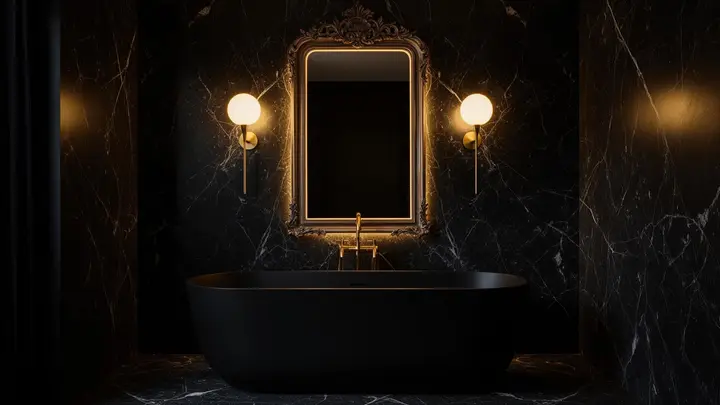
Bathroom lighting
A bathroom is not a utility room. Vertical light at the mirror, IP-rated fittings in the shower zone and a warm scene at the bath define the premium experience.
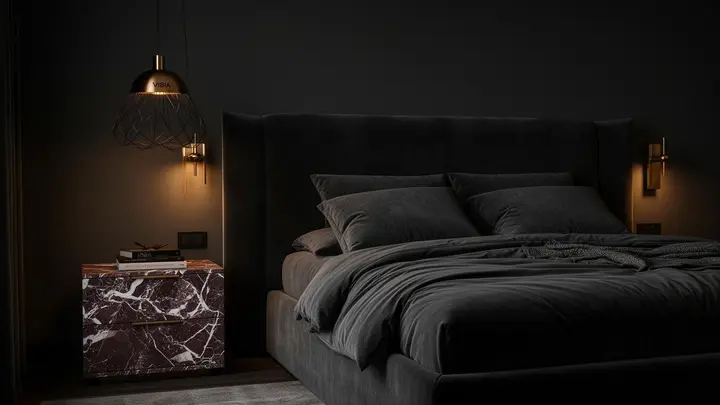
Bedroom lighting
A bedroom needs soft ambient, precise reading light and a Warm Dim evening mode. Downlights directly above the bed never belong.
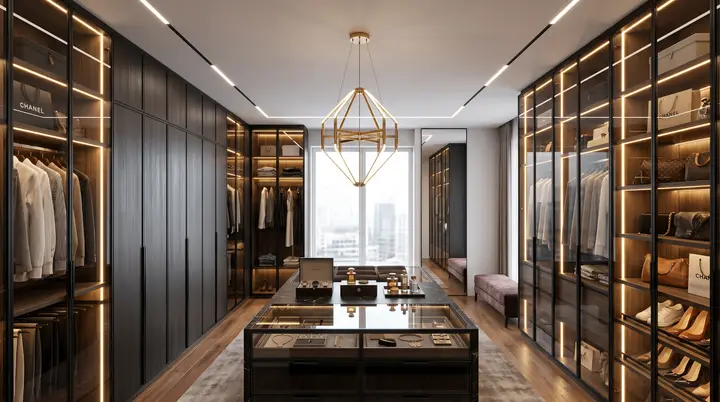
Wardrobe lighting
A wardrobe is where outfit decisions happen. High CRI, vertical light and integrated linear strips in the shelves are the minimum.
Common mistakes
Review layering, CCT, drivers and scenes before electrical design. This is a design checklist, rather than a project statistic.
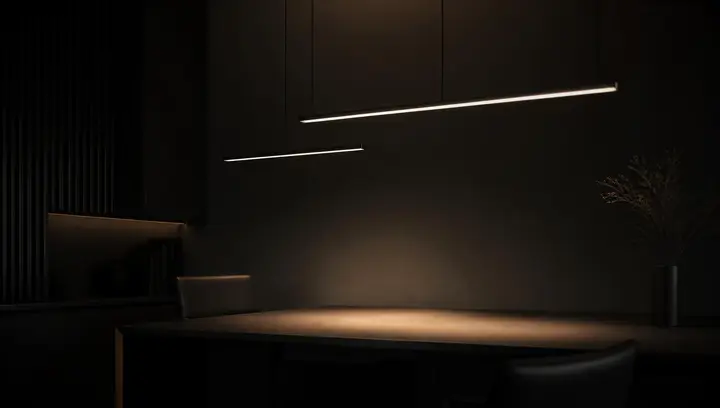
UGR
Why 500 lx alone is not enough — UGR, uniformity, CRI, colour temperature and Human Centric Lighting in practice.
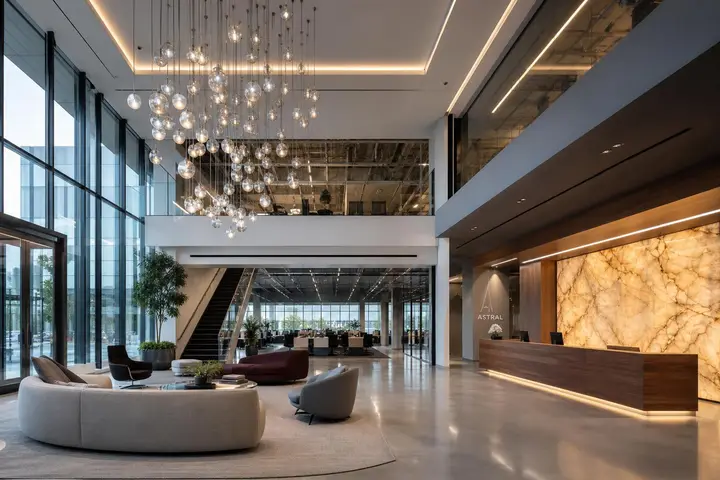
UGR
UGR indicates discomfort glare under specific conditions. It depends on luminaires, room geometry, reflectances and observer position; it does not describe all aspects of visual comfort.
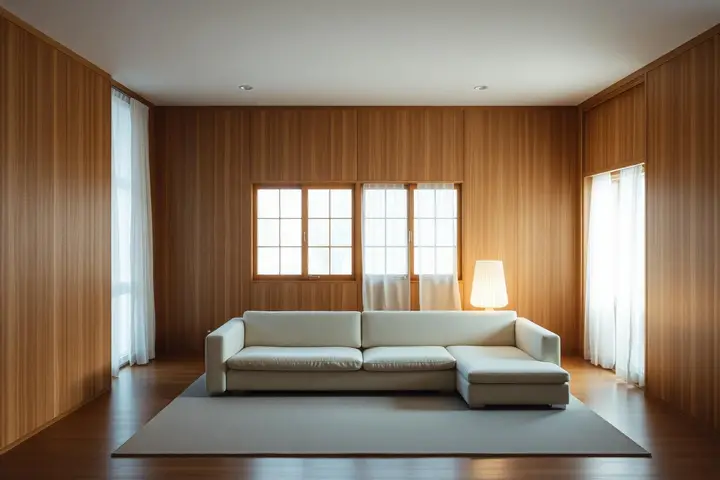
CRI
The gap between CRI 80 and 95 is not a technical detail — it's the difference between a flat and a cinematic interior.
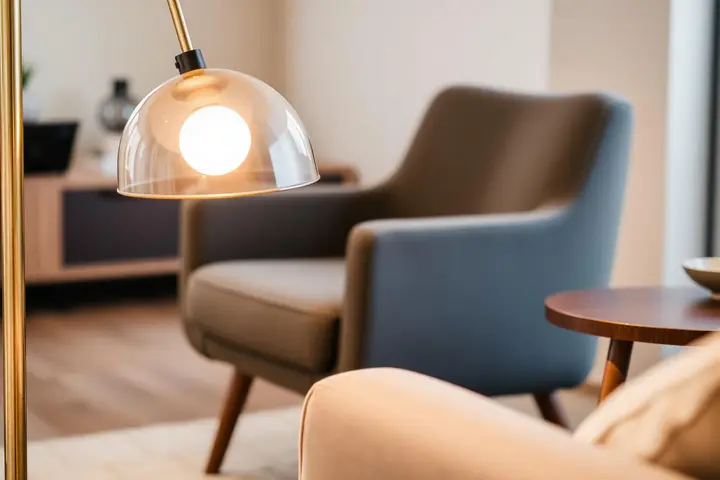
DALI
When phase dimming is enough and when a DALI bus with scenes really pays off.
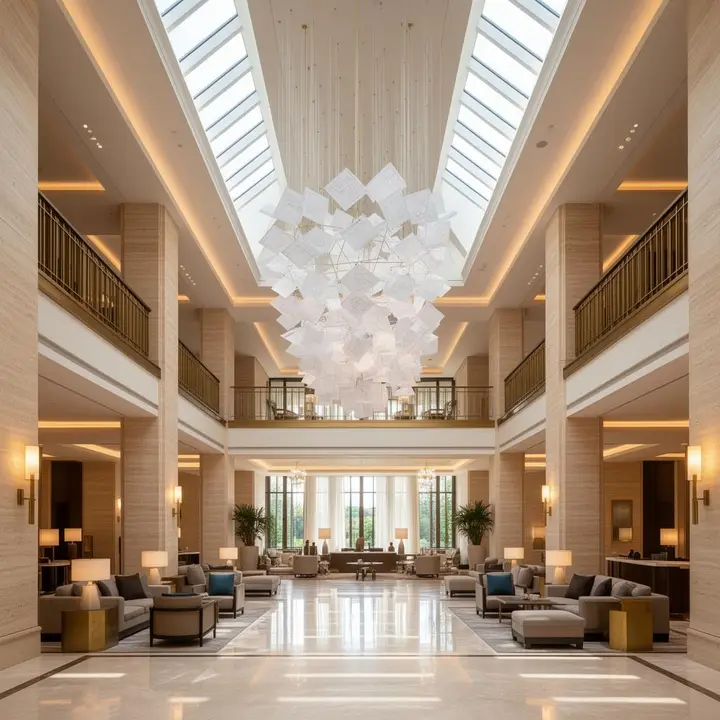
Colour temperature
2700 K isn't nostalgia — it's the tool hospitality uses to sell calm and luxury.
CRI
CRI (Ra) describes how faithfully a light source renders colours compared to a reference. For demanding interiors, consider CRI 90+ and check R9 separately; this is design advice, not a universal standard requirement.
DALI
How to check the exact variant, control gear and DALI controls: a checklist before ordering, DT8(Tc), scene testing and consultation preparation.
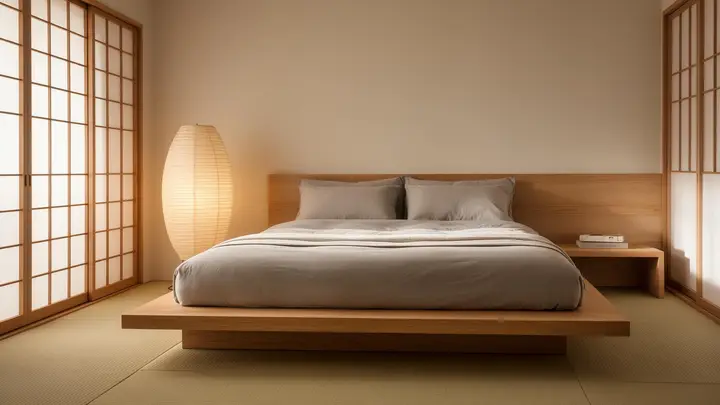
Dimming
Good dimming is more than a slider. Driver, curve and method together decide whether the light truly breathes or pulses.
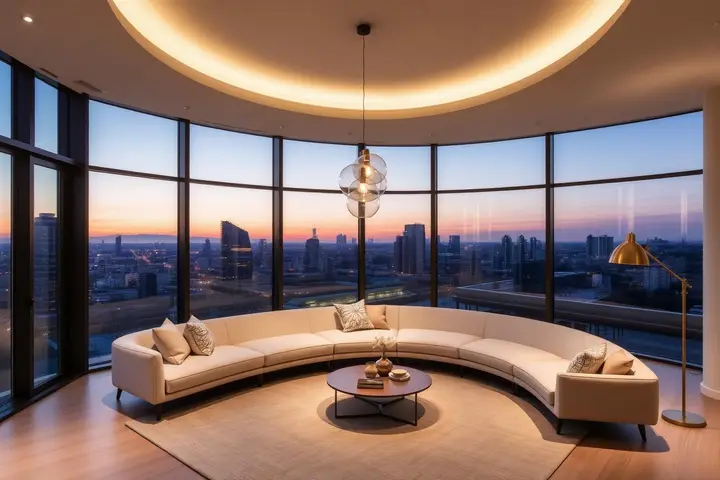
Smart control
The control platform affects comfort, support and expansion options. Each platform has its own functions and project requirements.
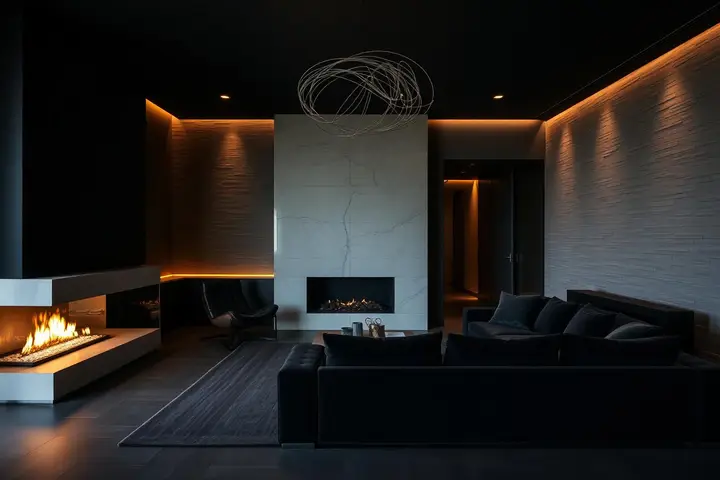
Colour temperature
CCT in kelvins describes the colour appearance of white light. For a warmer atmosphere, consider 2700–3000 K or 2200 K; the overall impression also depends on intensity, materials and other lighting properties.
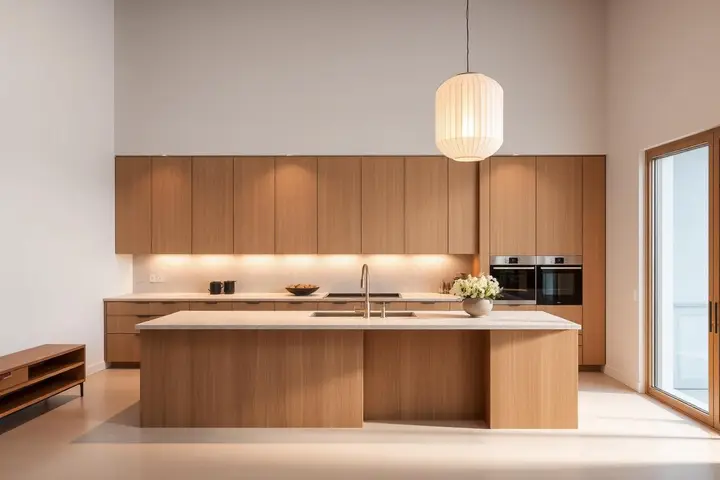
Luminaire types
Combine lighting tasks and choose an exact variant: mounting, dimensions, light source, control and a practical datasheet checklist.
Biodynamic lighting
Biodynamic lighting mimics the daily course of natural light — in both intensity and spectrum. It is not just an automated warm-to-cool colour shift.
Premium Light Studio
Get in touch — from brief through luminaire specification to DALI and Smart home integration.
Create a brief