Bedroom lighting
Bedroom lighting: calm, reading and sleep quality
A bedroom needs soft ambient, precise reading light and a Warm Dim evening mode. Downlights directly above the bed never belong.
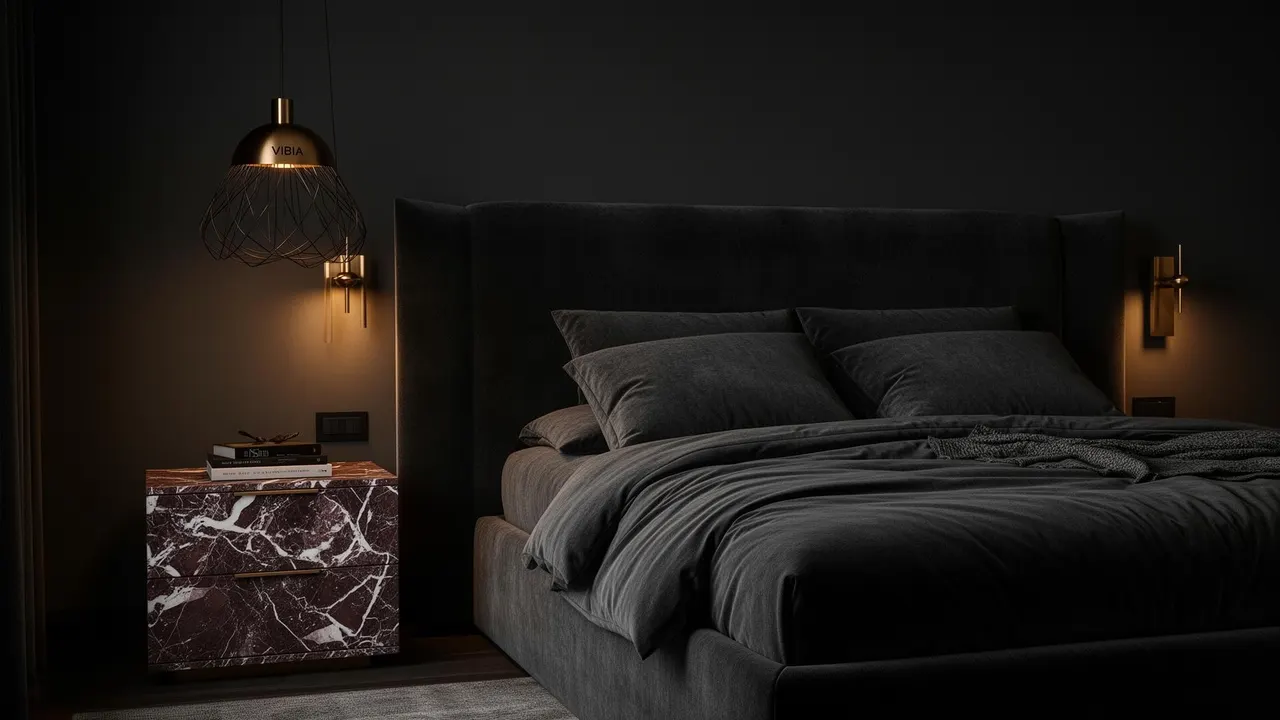
A bedroom needs light for reading, orientation and a calmer evening routine. Reduce light exposure before bed and minimise it during sleep. Effects depend on spectrum, light at the eye, timing and duration; CCT alone does not guarantee sleep quality.
Layers: ambient (cove or indirect ceiling), task (bedside reading), accent (art spot, under-cabinet linear), wardrobe and night (low floor-level orientation).
Downlights above the bed are one of the most common mistakes — they glare into the eyes of someone lying down and throw harsh shadows. If unavoidable, shift them above the foot of the bed and use a deep-recessed dark-light optic.
Reading light should be individual per occupant — adjustable arm or pendant by the bedside, aimed at the book not the partner. CCT 2700–3000 K, dimmable, CRI ≥ 90.
For evening use, reduce light reaching the eye and limit glare. Warm Dim can create a pleasant atmosphere but does not remove the blue component. CIE recommends lower exposure in the three hours before bed; ordinary lux without spectral information is not a universal biological threshold.
Place night orientation light low and direct it away from the eyes. Use only the intensity and duration needed for safe movement, for example with a sensor. Settings depend on the room and user.
Practical applications
Master bedroom
Ambient cove, individual bedside reading sconces, art spot, wardrobe linear, floor-level night strip on PIR.
Hotel room (Hospitality)
Welcome at the door, Sleep at the bedside, automatic Night after 23:00 (floor orientation to bathroom). One button per scene.
Children's room
Central light for play and a separate reading lamp. Reduce exposure before bed; use night orientation light only when needed.
Guest room
Simple controls: one switch, one dimmer; reading lamps both sides; dim ceiling for orientation.
Advantages
- An evening routine with lower light exposure; individual sleep outcomes are not guaranteed
- Warm Dim builds the evening ritual without changing fittings
- Individual reading lights respect both partners
- Night-time orientation lighting designed to minimise disturbance to a partner
Limitations
- Cove and indirect lighting need carpentry
- Tunable White raises cost
- Night sensors need careful sensitivity tuning
Recommendations
- Never a downlight directly above the bed — wallwasher, cove or indirect only
- Individual reading light each side, dimmable
- CCT 2700 K, ideally Warm Dim, CRI ≥ 90
- Floor-level night orientation with intensity and duration matched to need
- Dimmable ambient with a stable minimum verified for the actual combination
- Smart home: one button for Sleep, one for Read
Common mistakes
- Downlight overhead — glare and shadows
- Bright light at the eye in the evening without regard to spectrum and duration
- No dimming at all — full power even at night
- Shared dimmer for both sides of the bed
- No floor-level orientation — partner woken on the way to the bathroom
In summary
Bedrooms need ambient + task + orientation, never a downlight above the bed. Warm Dim, individual reading lights and a low floor strip are the minimum for premium residential and hotel work.
Want a quick estimate of the luminaire count? Open the lighting calculator.
Sources
Premium Light Studio
Planning a project? Get in touch.
Apply the article to your project. Use the short form to describe the space, project stage and the help you need.
Prepare the project location, approximate dimensions, preferred timing and indicative budget. You can add a link to a plan or datasheet; describe any open questions in the notes.
Prepare a project enquiryThe article topic carries into an editable note that you can expand or replace.