Biodynamic lighting
Biodynamic lighting: what it really is and when it makes sense
Biodynamic lighting mimics the daily course of natural light — in both intensity and spectrum. It is not just an automated warm-to-cool colour shift.
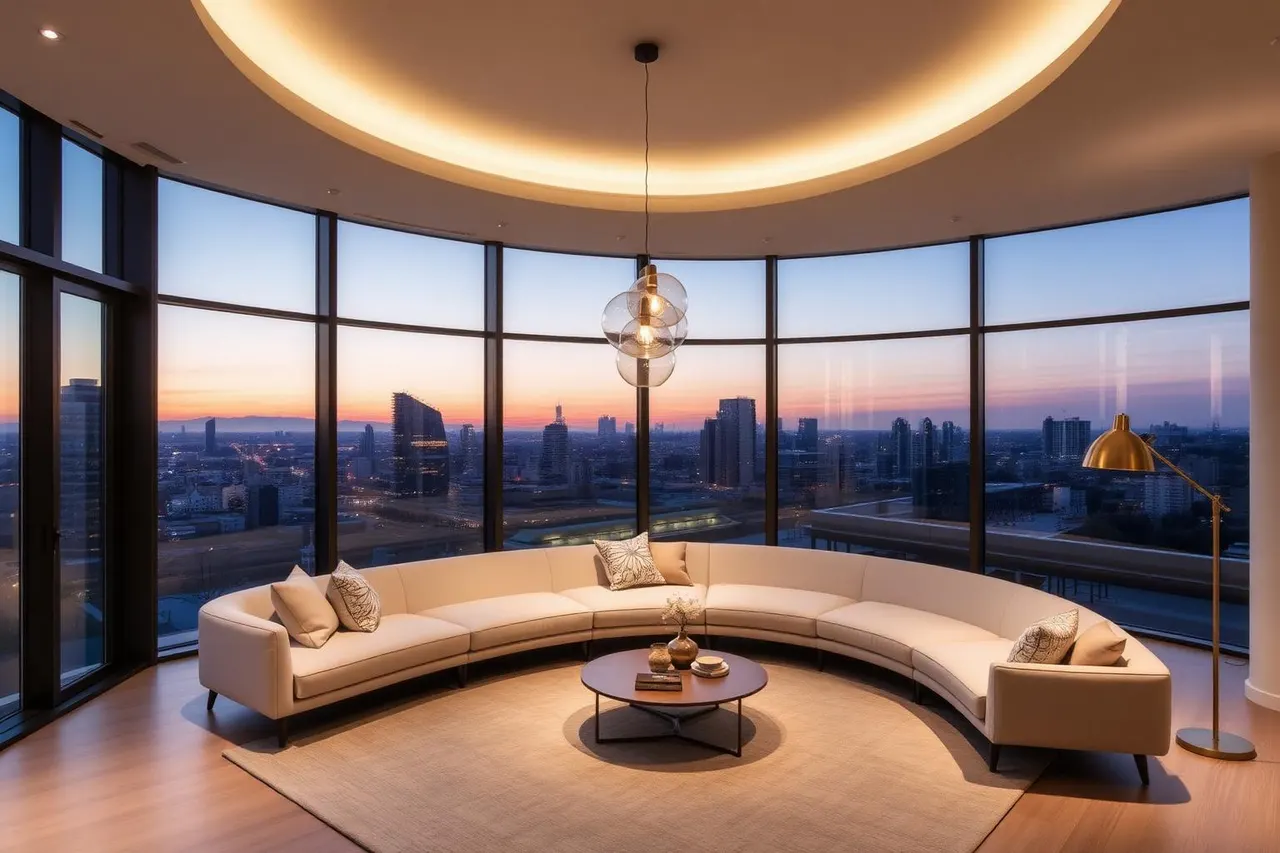
Biodynamic lighting (often called Human Centric Lighting) aims to support the human circadian rhythm by varying intensity, colour temperature and spectrum across the day, much like daylight does. In practice this means cooler, brighter light during the day, then a gradual dimming and warming toward the evening.
Natural daylight is not constant. It starts low and warm in the morning, peaks around midday at tens of thousands of lux outdoors with a cool spectrum rich in the blue band, then fades and warms again at dusk. The body reads these changes through ipRGCs containing melanopsin.
Melanopsin is most sensitive to blue light around 480 nm and drives the non-visual effects of light: circadian entrainment, melatonin suppression, alertness and sleep quality. CCT in kelvins alone does not capture this — spectrum, intensity at eye level and duration of exposure all matter.
Biodynamic differs from plain Tunable White in intent and control. Tunable White is just the hardware capability. A biodynamic (or Human Centric) scene is the scenario layered on top: when, how quickly and at what intensity CCT changes and how it reacts to daylight.
CIE uses the CIE S 026 system, including melanopic EDI, to characterise relevant light exposure. Select design targets for the population and conditions using current evidence; CCT alone cannot establish them.
For the circadian effect, vertical illuminance at eye level matters more than horizontal on the desk. Biodynamic designs combine ceiling fittings with indirect and wall-grazing layers — not just kelvin changes on downlights.
In the evening, lowering CCT is not enough. Even warm light at high intensity can suppress the evening melatonin onset. A good biodynamic scenario lowers intensity in parallel with the warming CCT.
Practical applications
Offices
Daytime 4000–5000 K and higher intensity (with an individually verified exposure target), evening shift to 3000 K and below; DALI-2 DT8 with daylight sensor.
Schools
Tunable White supports concentration during lessons and warms toward end of day; preset scenes for specific tasks.
Hospitals & healthcare
Biodynamic scenes help inpatients entrain even without daylight; warm 1800–2200 K night mode.
Hospitality (hotels)
Hotel room with Welcome / Day / Evening / Sleep scenes; gradual sunrise wake-up, Warm Dim evening.
Senior living
Melanopic sensitivity is often reduced with age; higher daytime intensity can support alertness and stabilise the rhythm, always with care staff.
Residential (Penthouse, villas)
Most useful in master bedrooms, wardrobes and living spaces with little daylight; for many homes a quality Tunable White scene with manual Morning / Day / Evening switching is enough.
Advantages
- Supports the natural circadian rhythm
- Supports a considered daily light schedule; individual health outcomes are not guaranteed
- Flexibility in spaces with little daylight
- Energy savings via daylight integration
Limitations
- Higher up-front cost (DT8 drivers, control, commissioning)
- Without a real scenario it is only expensive Tunable White
- Circadian effect depends on age, individual rhythm, daylight and exposure
- Not a treatment — supportive, not a substitute for clinical care
Recommendations
- During the day in work spaces, aim for higher intensity and a cooler spectrum (typically 4000–5000 K); in the evening, drop both intensity and CCT (2200–2700 K).
- Evaluate vertical illuminance at eye level, not only horizontal on the desk.
- Drive Tunable White over DALI-2 DT8 with scenes tied to time of day and a daylight sensor.
- Treat daylight and blinds as part of the lighting concept, not a separate trade.
- In bedrooms and hotel rooms, design a true night mode — very low intensity, warm spectrum, ideally no blue band for night-time orientation.
- In schools, offices and healthcare, design to CIE S 026 metrics (melanopic EDI), not just CCT.
Common mistakes
- A marketed 'circadian luminaire' that only shifts CCT without adjusting intensity or reacting to daylight.
- Claiming biodynamic lighting 'cures' sleep disorders or depression — it may support good habits, it does not replace treatment.
- Even warm evening light can affect melatonin, depending on spectrum, light at the eye, timing and exposure duration.
- Time-only control with no seasonal adjustment.
- Installing Tunable White drivers without programming any scenes.
- Chasing the 'circadian effect' while ignoring light quality (CRI, R9, flicker).
In summary
Biodynamic lighting is not just an automated warm-to-cool colour change. It is a thoughtful scenario of intensity, spectrum and control that can support the circadian rhythm. Most useful in offices, schools, hospitals and Hospitality; in residential, judge per space and daylight availability.
Sources
Premium Light Studio
We design lighting around the quality of light, not just luminaire output.