Luminaire types
Luminaire types and layered light: downlight, linear, pendant, wallwasher
Combine lighting tasks and choose an exact variant: mounting, dimensions, light source, control and a practical datasheet checklist.
How do you choose an exact luminaire variant?
Start with the lighting task and mounting method, then compare exact manufacturer codes. Check each code's dimensions, finish, light source, power supply and control against its datasheet and instructions. A family photograph or a dimmable label does not resolve those choices.
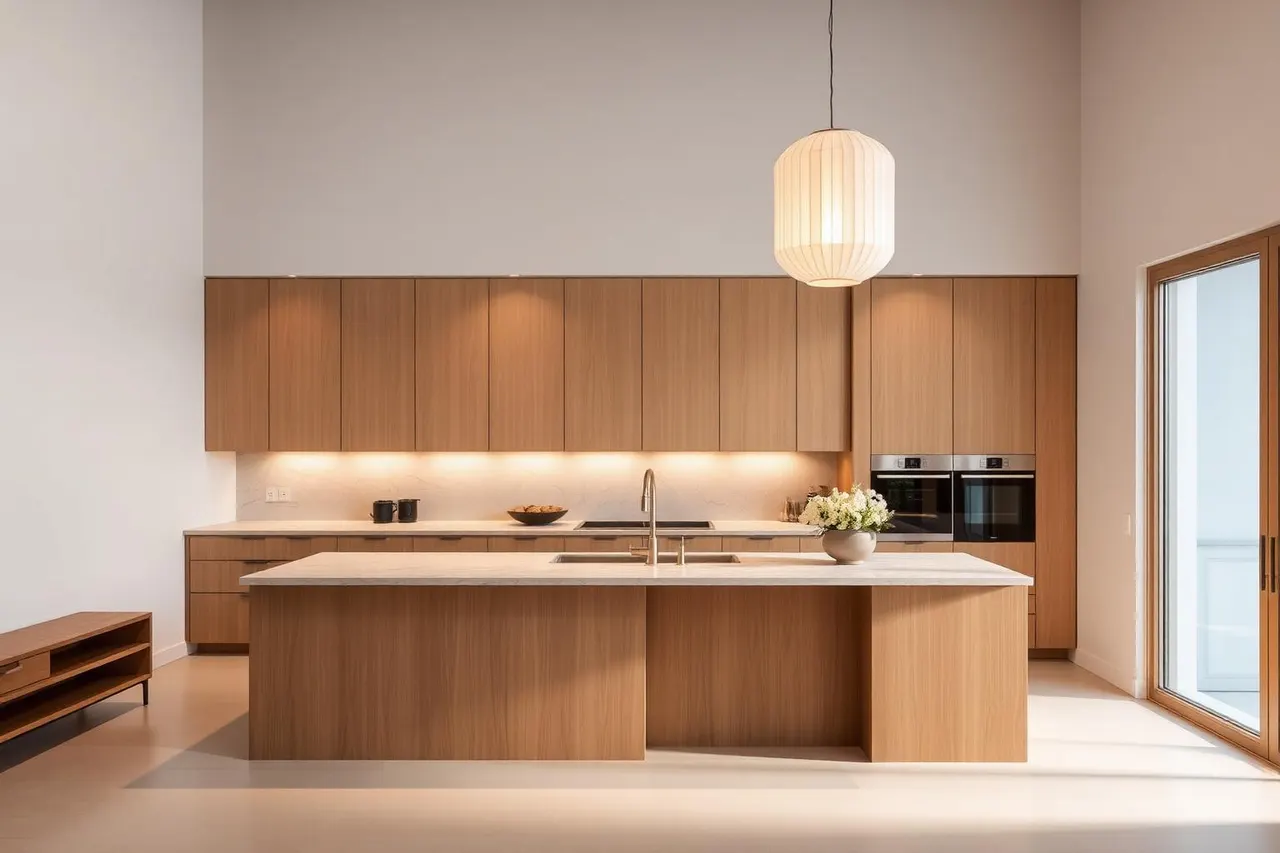
A design can distinguish three lighting functions: ambient, task and accent. Choose the number of layers and luminaires for the space; a single luminaire can serve more than one function.
Downlight — most universal, ceiling spot for task and accent, ideally with honeycomb and a dark-light recess. The wall-wash variant adds a soft vertical layer.
Linear profile — indirect light, perimeters, kitchen plinths, stair washes. Continuous, dot-free, often concealed in coffers, stone or millwork.
Pendant — creates the focal point and defines the function: dining, kitchen island, reception, bar. Aesthetic plus task light.
Wallwasher — evenly lights a wall, expands the space, creates a gallery feel for art, stone and wood cladding.
Cove — concealed indirect uplight in a recess or ceiling step. The 'breathing' base of a room that visually lifts the ceiling.
Spot & tracklight — flexible accent for art and displays. Irreplaceable in Retail and galleries.
Floor / table lamp — the eye-level layer. Crucial for evening intimacy, often skipped in modern interiors.
Practical applications
Living room
Ambient cove or wallwasher; task floor lamp by the armchair; accent on art.
Kitchen
Combine general light with worktop lighting; set pendant quantity and height for the island dimensions, light distribution and sightlines.
Dining
A pendant can emphasise the table, with a lit wall adding another layer. Select height, CCT, colour rendition and dimming for the actual space and variant.
Bedroom
Cove ambient, wall lights beside the bed (never downlights overhead), spot on art, Warm Dim for wind-down.
Hospitality (hotel room)
Ambient (linear cove), task (bedside, mirror), accent (art spot, entry pendant). Welcome → Relax → Sleep scenes.
Retail / Showroom
Track luminaires allow accents to follow merchandise. Design contrast and wall lighting for the actual products, materials and displays.
Advantages
- Layering removes flatness and shadows in the wrong places
- Independent control can create more scenes when circuits and components support it
- Concealed linear and cove read as luxury even in simple interiors
- Professional look on camera and video
Limitations
- Requires planning before electrical engineering
- Cove and linear need carpentry / dry-walling
- More fittings = more drivers and higher up-front cost
Recommendations
- Start with the lighting task and mounting position; choose the number of layers for the space.
- Check pendant height against its dimensions, distribution, sightlines and manufacturer instructions.
- Compare exact codes using the checklist below; ask for confirmation of unresolved data.
- Assess distribution, glare and controls in the actual space, using a calculation or trial where needed.
Common mistakes
- Single central ceiling light with no layering
- Downlight right above the dining table — shadows on food and faces
- Linear with visible LED dots
- Pendant height chosen without checking sightlines, distribution and instructions
- Missing the eye-level layer — interior loses intimacy
In summary
Consider ambient, task and accent functions for the needs of the room. Their combination is a design tool, rather than a mandatory number of luminaires or layers. Check distribution and control for the actual space.
Want a quick estimate of the luminaire count? Open the lighting calculator.
| What to compare | What to verify in the documents |
|---|---|
| Code and configuration | Exact manufacturer code, size, finish and supply region. A shared family name may cover different configurations. |
| Mounting and dimensions | Fixing method, cut-out, weight, height and space for the power supply, checked against the instructions. |
| Light source and output | Is the source included? Distinguish source output from luminaire output and check which configuration the stated lm describe. |
| CCT and CRI | Values for the exact LED variant or chosen lamp. A luminaire photograph cannot establish the values of a replaceable source. |
| Power and control | Power-supply type and location, included components and the specific dimming method. Check compatibility of the whole assembly. |
| Environment | Intended use and manufacturer conditions. IP alone does not establish suitability for every installation position. |
| Documents and conflicts | Datasheet for the code, applicable mounting instructions and photometry. Ask for confirmation of revision and scope when values differ. |
Related questions
Are a photograph and a product-family name enough?
They support an initial visual choice, but an exact specification needs a code and configuration. Compare mounting, size, finish, source and control; do not apply one variant's data to the whole family.
Does dimmable automatically mean DALI?
No. The manufacturer may specify an integrated dimmer or another interface. Check the actual power supply and control method; for DALI-2, check the relevant certified components. Assess compatibility for the whole assembly.
What should you prepare for a selection consultation?
Prepare a plan or dimensions, ceiling height and build-up, lighting task, existing controls and budget. Include a product link, the exact code if known, and the available datasheet. State which decisions are still open.
Sources
- ERCO — Luminous flux — Distinguishes lamp and luminaire output; lm alone does not establish illuminance on a particular surface.
- Flos — Arco LED F0303000 — An exact-code example with separate output, power-supply, integrated-dimming and document fields. These do not automatically apply to other Arco variants.
- DALI Alliance — DALI luminaires — Explains components and conditions for DALI-2 and D4i marks. A mark does not replace checking the actual assembly.
The eye-level layer is often complemented by a portable lamp. See our selection in the Portable lights category.
Premium Light Studio
Planning a project? Get in touch.
Apply the article to your project. Use the short form to describe the space, project stage and the help you need.
Prepare the project location, approximate dimensions, preferred timing and indicative budget. You can add a link to a plan or datasheet; describe any open questions in the notes.
Prepare a project enquiryThe article topic carries into an editable note that you can expand or replace.